
What Is a Refresher Drink — And How Do You Add Refreshers to Your Menu?
If you’ve walked through a drive-thru, stopped at a cafe, or ordered at a fast-casual restaurant lately, you’ve probably noticed the same thing:
Refreshers are everywhere.
Operators across segments are asking:
- What exactly is a refresher?
- Why are refreshers suddenly so popular?
- How do I add refreshers to my menu without creating operational chaos?
Let’s break it down.
What Is a Refresher Drink?
A refresher is a cold, fruit-forward beverage designed to be:
- hydrating
- flavorful
- visually appealing
- easy to drink any time of day
A refresher usually lives somewhere between lemonade, juice, and iced tea, often layered with real fruit flavor and vibrant color.
Most refresher drinks share a few defining traits:
- A clear fruit “hero” flavor
- A hydrating base (water, lemonade, tea, sparkling water, or functional beverage)
- Light to moderate sweetness
- Noticeable acidity that keeps the drink crisp
- Low or no caffeine
And consumers have absolutely embraced them.
According to Datassential, most consumers have tried a refresher, and many enjoy them weekly. Interestingly, only a minority say they actually prefer caffeinated versions, reinforcing that refreshers are valued more for fruit and refreshment, not energy.
In other words:
Refreshers are modern, fruit-forward, all-day beverages — not soda, not juice, and not coffee.
Refreshers Have Roots in Longstanding Global Traditions
The idea of a light, fruit-forward beverage isn’t new. Long before the term “refresher” showed up on menu boards, cultures around the world had already solved the problem of creating something hydrating, flavorful, and easy to sip any time of day.
Three traditions in particular help explain where modern refresher drinks come from.
Lemonade
Lemonade has been doing the work of “refreshment” for centuries.
It pairs:
- bright citrus acidity
- water
- balanced sweetness
The result is simple, craveable, and endlessly adaptable. Operators can layer fruit purees, like our Shelf Stable Pourable Fruit, herbs, teas, or sparkling water on top of lemonade, and suddenly, you’re in refresher territory.
> Try Oregon Fruit’s Shelf Stable 4+1 Lemonade Concentrate
Aguas Frescas
In Mexico and Latin America, aguas frescas have always celebrated real fruit.
Typically made with:
- fresh fruit or fruit puree
- water
- light sugar
- sometimes lime
They offer fruit-forward flavor without heaviness — exactly what today’s refresher drink category is designed to deliver.
In many ways, aguas frescas represent the blueprint: fruit first, hydration second, sweetness last.
Fruit Tea
Across Asia and beyond, fruit teas blend brewed tea with fruit flavors, juices, or purees.
They bring together:
- tannin and structure from tea
- aroma and color from fruit
- a refreshing, not-too-sweet finish
This approach introduced consumers to the idea that beverages could be both fruit-centric and layered, not just sweet.
So What Makes a Modern “Refresher” Different?
What we call a refresher drink today takes inspiration from all of these traditions, but packages them into a clearer category:
- colder
- visually vibrant
- customizable
- built for foodservice workflow
- positioned as an all-day beverage
Instead of one single recipe, “refresher” describes a style:
fruit-forward, lightly sweet, hydrating, visually appealing, and easy to repeat.
That clarity is exactly why operators — from cafes to restaurants to quick service — are embracing refreshers so quickly. The category gives guests language for what they already want, and it gives operators a flexible platform they can adapt to their concept, margins, and menu strategy.
Starbucks helped kick off mainstream refresher awareness with the launch of its Refreshers platform in the early 2010s, introducing fruit-forward flavors like Very Berry Hibiscus and Cool Lime. Framed initially as a light energy alternative using green coffee extract, the drinks trained consumers to expect something that was not coffee, not soda, and not juice, but still refreshing, colorful, and craveable.
Since then, the category has steadily expanded beyond its original caffeine-adjacent positioning. Today, refreshers show up across formats and dayparts. Brands from Dunkin' to Keurig to Twinings have introduced refresher-style beverages designed for both foodservice and at-home consumption. Even quick-service innovators like Taco Bell have embraced fruit-forward, lightly sweet beverages as a core part of their menu strategy.
What’s notable is not just who is offering refreshers, but how broadly they now appear. These drinks are no longer confined to coffee chains or limited-time summer menus. They’ve moved into casual dining, fast casual, and even fine dining as alcohol-free options, batched spritz-style beverages, and premium non-soda alternatives.
That evolution points to something bigger: “refresher” is no longer a proprietary product name. It’s a consumer-recognized beverage category.
Why Consumers Love Refreshers
Refreshers work because they solve real consumer needs.
1. Flavor Without Heaviness
Guests want something that feels special — but not indulgent every time.
Refreshers deliver:
- natural fruit character
- lower perceived heaviness than smoothies or shakes
- an alternative to fountain soda
Easy to order. Easy to repeat. Easy to crave.
2. A Shift Toward Fruit-Forward Beverages
We’re seeing rising preference for:
- citrus blends
- berry flavors
- tropical fruits
- herbal and tea elements
They feel fresh, modern, and flexible — appropriate from morning through evening.
3. Better-For-You Cues (Without Preaching)
Refreshers can signal “lighter and real” when done thoughtfully:
- real fruit ingredients
- cleaner, simpler labels
- lower sugar vs. classic soft drinks
They aren’t diet beverages — they’re balanced, natural-leaning choices.
4. They Look Amazing
Color matters.
Fruit inclusions matter.
Clear cups matter.
And yes — they photograph beautifully.
Where Refreshers Fit on Your Menu
Refreshers adapt across multiple concepts.
Coffee shops and cafes
- Non-coffee option for loyal guests
- Afternoon beverages that won’t keep people up
- Family-friendly, teen-friendly category
Quick-service and fast casual
- Premium upgrade compared to soda
- Platform for limited-time seasonal flavors
Bars and full-service restaurants
- Alcohol-free cocktails
- Spritz-style batched drinks
- Upsell opportunities without alcohol
Same foundation — different execution.
Oregon Fruit’s “Fruit-First” Approach to Refreshers
At Oregon Fruit, we think about refreshers through one very specific lens:
Fruit first. Always.
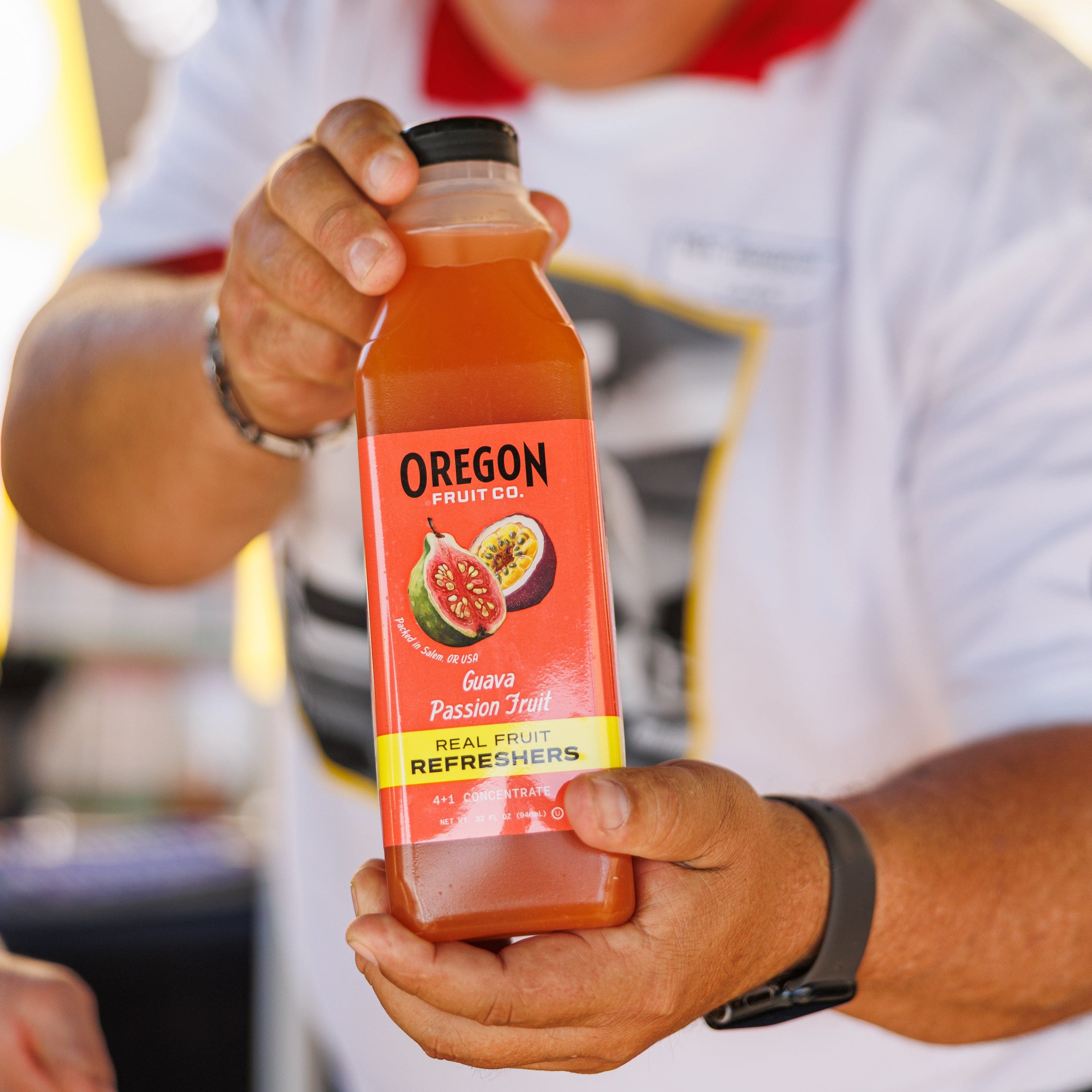
Our Real Fruit Refresher bases are built around:
- fruit purees for body, aroma, and natural color
- juice concentrates for bright flavor and controllable sweetness
We’re not trying to imitate fruit.
They taste like fruit because they’re made from fruit.
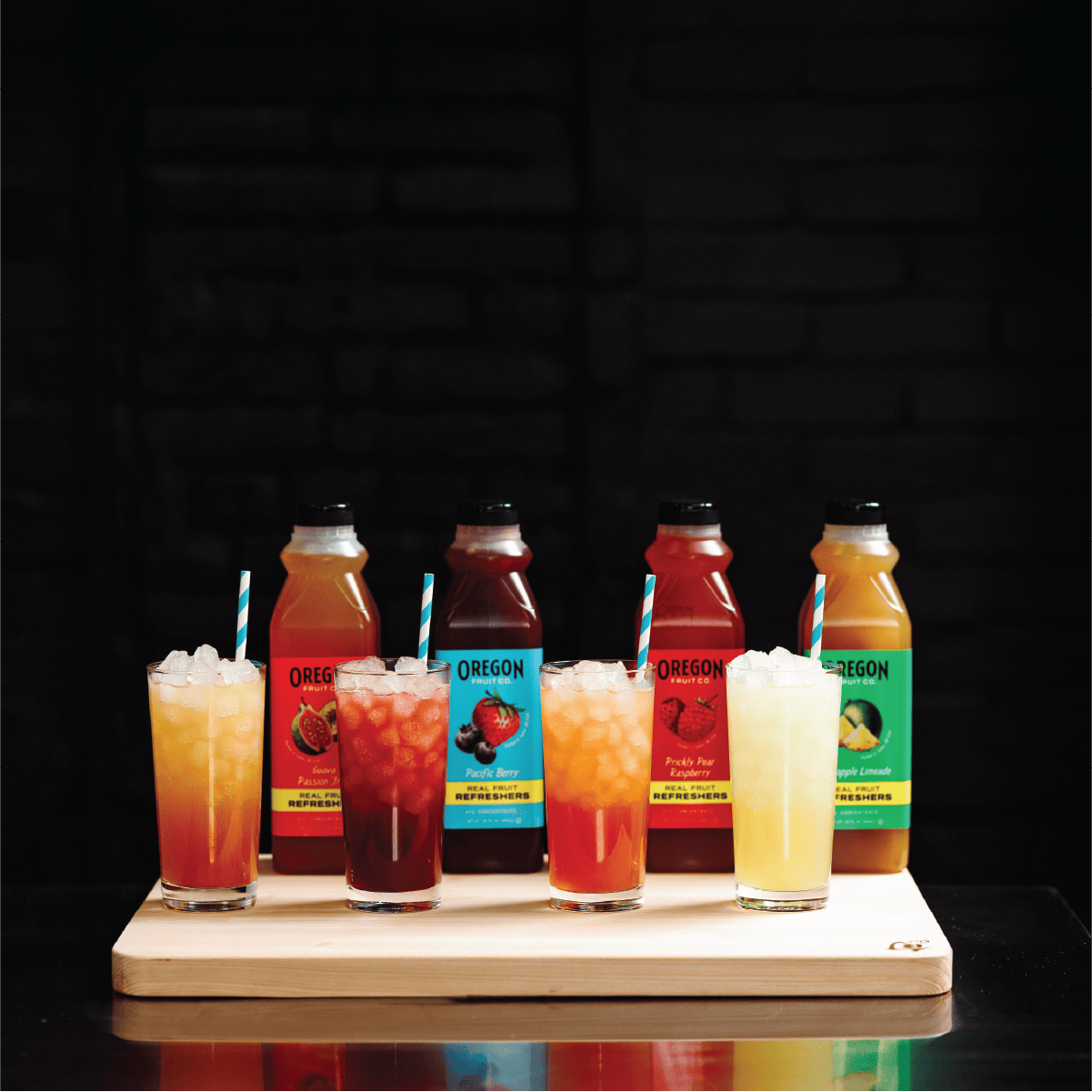
Four ready-to-use refresher bases
Designed for real foodservice operations:
Each is:
- 4+1 concentrate
- ideal for still or sparkling formats
- made with real fruit
Operators can pour, dilute, batch, customize, and serve.
> Shop Oregon Fruit's Real Fruit Refreshers
Why Freeze-Dried Fruit Isn’t the Answer
Some refresher programs rely on the addition of freeze-dried fruit to the cup, purely for visual effect.
It often:
- never fully rehydrates
- sinks or sits dry
- doesn’t pass through straws
- creates inconsistent texture
Pretty in photos.
Disappointing in the cup.
A better approach: Diced Pourable Fruit
Oregon Fruit Diced Pourable Fruit allows you to:
- add visible real fruit pieces
- create texture and bite
- deliver on the promise of “fruit in the glass”
Every sip feels intentional — not decorative.
> Shop Oregon Fruit Shelf Stable Diced Pourable Fruit
How to Add Refreshers to Your Menu (Step-By-Step)
Here’s a simple framework to launch successfully.
1. Choose your base platform
Pick a base for your refreshers:
- water
- lemonade
- tea
- sparkling or soda
You can always expand into multiple bases.
2. Start with core fruit bases
Build around 1–4 flavors:
- reliable “always on” core lineup
- one rotating seasonal flavor to create excitement
Smaller, focused menus perform better than overcrowded ones.
3. Add diced pourable fruit for impact
Use fruit pieces to:
- create visual identity
- justify premium pricing
- differentiate from powdered or freeze-dried shortcuts
Match or contrast flavors depending on the experience you want.
4. Standardize recipes and costing
Define:
- total ounces per drink
- dilution ratios
- inclusion amounts
- target margins
Consistency protects both guest experience and profitability.
5. Train for speed and simplicity
Think realistically about rush times.
Plan:
- batching strategies
- dispenser vs. made-to-order builds
- visual training tools
- clear SOPs
If your team can’t execute during peak times, the program won’t last.
Bringing It All Together
Refreshers aren’t a fad.
They’re a flexible category built around what today’s guests already want:
- fruit
- refreshment
- lighter options
- beverage variety beyond coffee and soda
With the right strategy and the right fruit-first tools, operators can:
- add new revenue streams
- elevate non-coffee and non-alcoholic offerings
- tell a compelling story about real fruit and quality
Oregon Fruit supports that vision with:
- real fruit refresher bases
- diced pourable fruit inclusions
- formats designed for real kitchens and bars
Looking for help with menu strategy or product development? Our team of Food Scientists, Culinary Specialists, and industry experts are ready to help - reach us at foodservice@oregonfruit.com