Coffee Meets Cocktails
A Conversation on Seasonality, Fruit & Beverage Creativity
Morgan Eckroth × Jeffrey Morgenthaler | Oregon Fruit
▶ Watch on YouTube: youtu.be/sxiKNVRPZKo
MORGAN ECKROTH 2022 US Barista Champion · Author of Coffee, For Here · @MorganDrinksCoffee
JEFFREY MORGENTHALER Bartender · Author of The Bar Book · Developer of the Bevnap: Cocktail Recipes app
What do a specialty coffee champion and a cocktail bar veteran actually have in common? More than you might think.
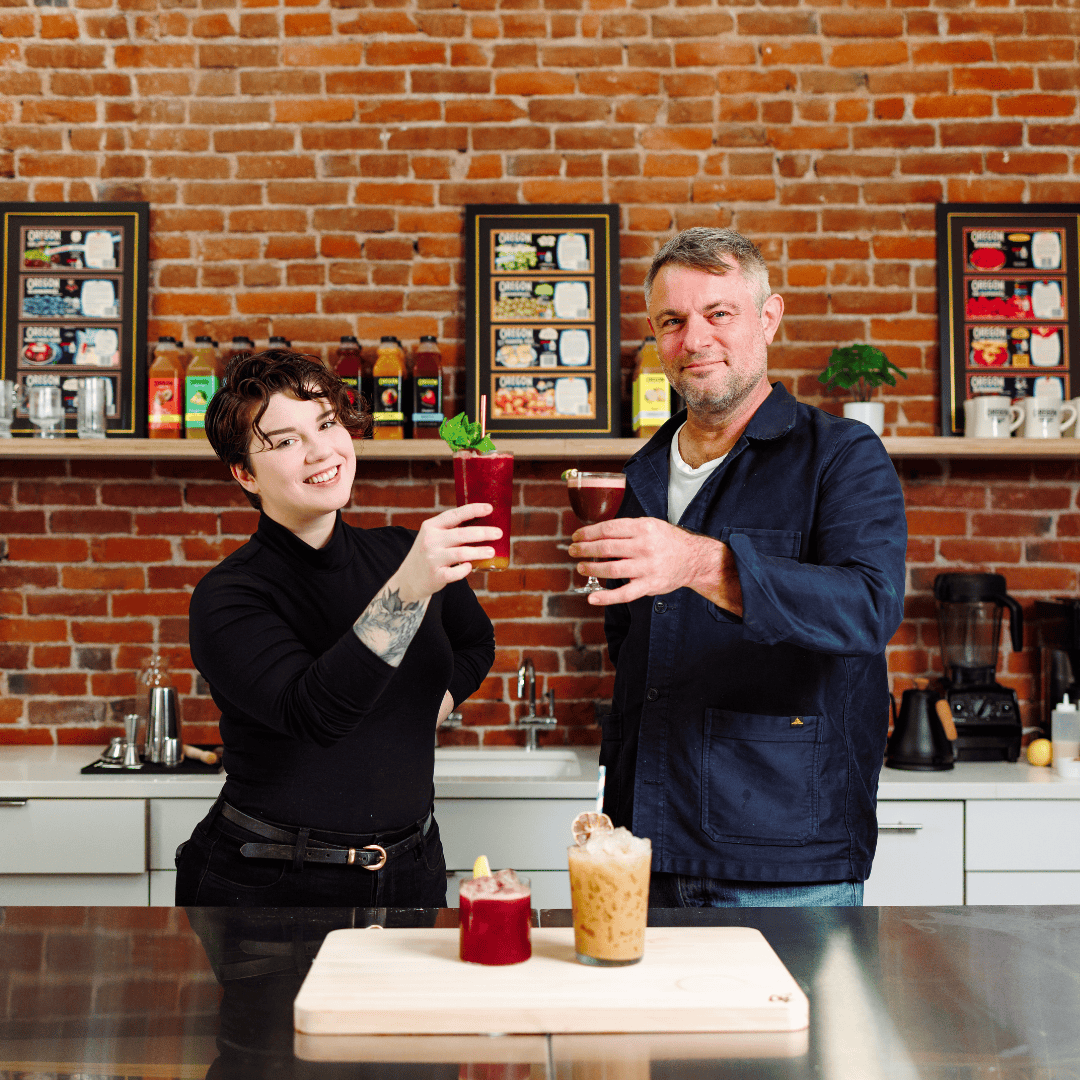
In this wide-ranging conversation filmed at Oregon Fruit, Morgan Eckroth — 2022 US Barista Champion and the creator behind @MorganDrinksCoffee — sits down with Jeffrey Morgenthaler, Portland-based bartender and author of The Bar Book, to discover just how much their two worlds overlap. What starts as a conversation about seasonal menus quickly opens into something bigger: a shared philosophy of beverage creativity that transcends the difference between an espresso machine and a cocktail shaker.
Here are the five big themes they dig into:
1. What "Seasonal" Actually Means (It's Not Just Produce)
Both Morgan and Jeff push past the obvious farmers-market definition of seasonality. Yes, using what's in season matters — but equally important is the emotional seasonality of a drink. Why does eggnog feel wrong in July even though its ingredients are available year-round? Because seasonality is as much about nostalgia, mood, and what guests are seeking at a given time of year as it is about ingredient availability. Morgan frames summer drinks as "exploratory" and winter drinks as "comforting," and argues that emotion should drive ingredient choice — not the other way around.
2. The Practical Challenges of Using Fruit in a Beverage Program
Fruit sounds simple until you're running a real program. Jeff raises the volume operator's nightmare: you need to be ready to serve a thousand of a drink or zero of a drink on any given day, with no way to know which. That means shelf stability, consistency, and controlled prep are non-negotiable. Morgan adds the barista's version of the same problem: coffee shops have almost no freezer space and limited refrigeration (most of it already claimed by milk), so shelf-stable, compact ingredients are king. Both agree that syrups and purees are the practical workhorses of fruit-forward beverage menus — and that fresh whole fruit, while beautiful, introduces dangerous inconsistency (a winter tomato vs. a summer tomato; an October apple vs. a February one).
3. Building Creative Menus — Structure vs. Spontaneity
Jeff's background in architecture shows in his menu-building process: he starts with a structural sketch — a slot for something sour, a slot for something bitter, a slot for something spirit-forward — and then "chips away" at each, swapping seasonal accents without changing the underlying template. Morgan's process is almost the inverse: sensory inspiration first (petrichor after a rainstorm), ingredients second, format third. Two very different starting points that both arrive at polished, intentional drinks.
4. Garnishing, Naming & the Guest Experience
A drink isn't finished when it tastes good. Both Morgan and Jeff talk about the full arc of the guest experience — from how a menu is written and designed, to the visual presentation of the drink as it crosses the bar, to the garnish as a kind of final act of hospitality. Jeff's philosophy: the best garnishes either speak to what's in the glass (aroma, flavor, texture) or add a visual pop — and the act of finishing a drink is "a way of saying 'I love you' to the guest." Morgan adds that naming is the hardest part of the whole process, and that a great name can carry the seasonality of a drink all by itself.
5. Is the Line Between Cafes and Bars Disappearing?
Perhaps the most forward-looking part of the conversation: Jeff wonders aloud whether specialty coffee shops and cocktail bars are slowly converging into a single beverage category. With the explosive growth of non-alcoholic cocktails, coffee programs inside bars, and mixology-focused cafes (like Discourse in Milwaukee, which uses coffee as its "base spirit"), the distinction is blurring. Both see this as exciting — a chance to share techniques, glassware, ingredients, and creative DNA across what used to feel like completely separate industries.
Full Transcript
Part 1: Thinking About Seasonality
Jeffrey Morgenthaler
Hi everybody, my name is Jeffrey Morgenthaler. I'm a bartender here in Portland, Oregon. I am the author of The Bar Book, and I'm here at Oregon Fruit with my friend Morgan — and we're talking about beverages. You want to talk about seasonality?
Morgan Eckroth
Let's do it.
Jeffrey
I think of seasonality in two different ways. There's that true farm-to-table, farmers market, Alice Waters sense of 'what's in season.' But then there's also the idea of seasonality based around nostalgia. The example I always give is Christmas eggnog — it would be weird to drink eggnog in July, even though eggs, milk, cream, sugar, nutmeg, and brandy are all available year-round. We have that seasonal memory attached to it. So when I'm working on a menu, I like to play with both of those ideas.
Morgan
I was thinking about this a lot leading up to today. Obviously seasonal produce is a huge component, but I keep coming back to emotion — what are people seeking at different times of year? Nostalgia is a great word for it. In the Christmas season you have family, tradition, all of these things people are feeling, consciously or not. Being able to play with that in drinks feels like a very seasonal component.
Whereas summer feels more exploratory to me — summer adventures, summer break, fun and splashy and pop-y. That emotional dimension might actually be more important than the ingredients themselves. The ingredients feel like they're supporting the emotion, rather than the other way around.
So when it comes to rotating seasonal menus — we have the four seasons, four quarters, three-month cycles. Is that how you structure your changes, or do you use different metrics?
Jeffrey
A little bit of both. We'll often have slots on a menu — think of them as templates — where the same style of drink gets a different accent ingredient each season. A sour formula is a perfect example: fall, we're using apple; spring, berries; late summer, apricot. But then there's also that other sense of seasonality where it's not exactly June 21st, but the weather has already changed and it feels like summer. So we just get in there and start hammering on those big summer flavors.
Part 2: Coffee & Cocktail Worlds Converging
Morgan
The coffee world pulls so much from more established worlds like cocktails, wine, and spirits — we're a much younger industry. But one really exciting thing I'm seeing is drinks getting sized down. For so long a signature coffee drink was a sweet latte, 12, 16, sometimes 24 ounces. Nowadays with more specialized menus, we're getting these really fun short drinks that are just packed with flavor. They give so much more creative space than larger latte formats.
Jeffrey
That's interesting. In bars, almost all of our beverages are served in transparent vessels — you can look across the bar and say 'I want that.' But for you, almost everything is a paper cup with a lid, or a plastic cup. How do you work around presentation when everything's in an opaque container?
Morgan
More than 50% of the coffee we drink in America is in a plastic or paper cup. So we're dealing with a lot more visual garnishing on top. You can't just hand someone a brown drink and say it's $8 — people don't want that.
Part 3: Working with Fruit in Beverages
Jeffrey
A big part of seasonality — especially in beverages — is fruit. What challenges do you think about when incorporating fruit into a seasonal beverage program?
Morgan
Citrus and coffee go so beautifully together — they grow together, they go together — but with milk drinks, you put lemon juice in and everyone knows what happens. So thinking about ways to incorporate brighter acidity through fruit, especially in milk drinks, is always top of mind. Texture is another big thing. With whole fruit, figuring out how to break it down or reassemble it into something smooth and drinkable is always a consideration.
My two main fruit strategies are syrups — fresh fruit syrups or stewed ones — and purees, which blend down into an easily workable texture. Both work hot or cold, and they're easily mixable.
Jeffrey
For me, shelf stability is huge because I run high-volume programs. We have to be prepared to sell a thousand of something or zero of something on any given day — and the drink needs to be exactly the same either way. You can't just prep for a hundred and hope for the best. Not being able to throw product away at the end of the day, while also having enough on hand that stays fresh — that's a massive consideration.
Morgan
And tied to that — consistency of ingredient flavor. Tomatoes always come to mind. A summer tomato from the farmers market is incredible; a winter grocery-store tomato is dry and watery. Even apples cycle quite a bit. Is your apple-based drink going to taste the same in fall as it does in February? Ideally the guest gets the same drink, but if you're working with fresh-sourced produce, that becomes a big question mark.
Jeffrey
Space is always at a premium too. We maximize guest space, which means never enough refrigeration, never enough freezer — and our freezers are full of clear ice cubes and whatever chef has in there. We've always done a lot of housemade syrups because the products just weren't available, but that means making sure raw materials show up, that the purveyor didn't forget to mention they're out of raspberries, and that the person trained to make it is actually in that day.
Morgan
Coffee shops typically don't have freezer space at all unless there's a bakery attached. Most storage space is already allocated to milk. So shelf-stable ingredients that can fit in small spaces become top priority, especially when you have an extensive signature beverage
Part 4: Making Fruit the Star — and Beyond Coffee
Morgan
Looking back at my recent coffee recipes, about 80% of them have fruit in them. I always start with what I hope the guest will experience from that drink, then work back to which ingredients support that experience. Fruit often becomes the star — my base ingredient — with auxiliary and supporting flavors built around it. How do you approach that?
Jeffrey
Completely similarly. With non-alcoholic beverages, I make the fruit the star. With alcoholic beverages, I use fruit to support the spirit. Bourbon works really well with stone fruit, for instance — I'm accentuating the bourbon, still driving that nostalgia and seasonality, but using fruit to make the star of the show shine.
Morgan
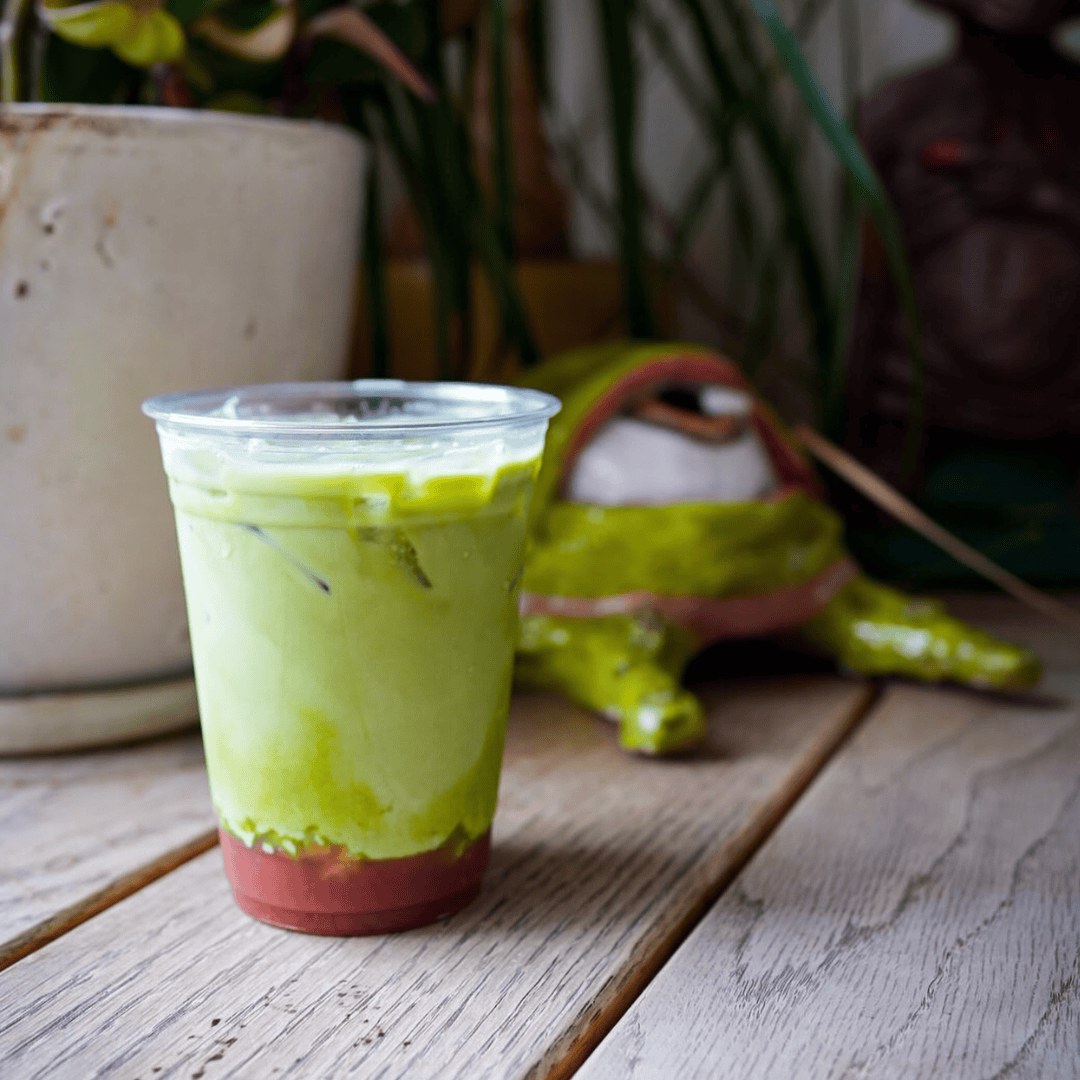
Matcha has had an explosive moment. Portland has entire matcha cafes now. And within those flavor profiles there's even more room to play, especially with lower-caffeine options — similar to the low-proof or NA movement in bars. There are so few fruits that matcha doesn't pair with: strawberry, tropical fruits like passion fruit and guava, berries, stone fruit like peach. It's incredibly versatile.
Roast profile also really drives what fruit works in coffee drinks. A really dark roast in a tropical sparkling refresher just blows it out — it's a mess. But a lightly roasted, naturally processed Ethiopian with all those original stone fruit notes? Put that in a tropical sparkling base and you have a delicious coffee soda.
So if you're a cafe stuck with a dark roast, maybe that sets you toward a spiced, comforting, dairy-heavy signature menu. But if you want those fun, fruity, refreshing drinks, look to tea and build a side menu there instead.
Jeffrey
And then you're appealing to an even broader base of guests — and you get different visuals. Tea isn't going to turn everything into a brown liquid, so you get different colors and layering that opens up entirely new possibilities.
Part 5: Creative Process — Architecture vs. Spaghetti
Morgan
Creative process is always my favorite thing to discuss with beverage people. I think you and I have very opposite styles.
Jeffrey
I went to architecture school before my life behind bars, and the design process is ground into my head. I start with a blank page and do a kind of word vomit — 'I need a drink that's strong, has a sour component, a seasonal fruit element, I want it in a certain glass, it'll be cold.' A loose sketch. Then I tighten it up: this is bourbon, this is a whiskey sour, I'll accent it with some local berries since it's July. It's like working a piece of marble — like Michelangelo said, I just remove everything that's not the sculpture.
Morgan
I very lovingly describe my process as throwing spaghetti at a wall and seeing what sticks. I do have structural similarities to your approach — a vague form that I work into tighter — but since most of what I develop are one-offs for competition or feature drinks, I'm rarely building out an entire repeating menu. I might walk outside, smell petrichor after rain, and think 'what if this was a beverage?' and then just grab ingredients and start stressing things down, mad-scientist style. There's definitely a learned rhythm to it, but I often start from a mess and refine very quickly rather than sitting with a structured plan.
Jeffrey
When I do a menu from scratch it's harder, but working with those slots helps. There's always something served up with a bitter drink, something sweeter and desserty. They're just blobs getting carved away. And the key is we replace like with like — we'd never replace a sour slot with a Manhattan, because guests who order that slot want that structural experience. Seasonality is the thread that gives the program interest as we move through the year.
Part 6: Naming, Garnishing & Guest Experience
Jeffrey
Naming — what's your thought on a fun, silly, foofy name?
Morgan
Naming is the hardest part. I love it, but it's the hardest part. It's the cherry on top — I've drunk so many disgusting beverages getting to a finished drink, finally carved my David, and then I get to give it the silliest name in existence. One of the drinks we're making today is called 'Passion on the Vine' — it has passion fruit puree and tomato in it. I was sitting there at midnight iterating through nothing, and just landed on that. Done.
I keep a running list of thousands of words and names in my phone's notes app and I go back and think every single one is garbage. But it's important — the name is what sells a drink, what people lock onto. You can get seasonality into a name too. There are summer names and winter names. And I often try to put a flavor cue in: 'passion fruit Ramos gin fizz' — people already know what they're getting.
Jeffrey
On garnishing: the best garnishes for my programs are the ones that speak to what's in the glass — maybe adding an aroma or a little edible element, either in contrast to or in support of the drink. Sometimes it's purely visual and doesn't serve much purpose other than looking super cool. But really it's a way of saying 'I love you' to the guest. I finished it. I made this for you. I actually completed it.
Morgan
I remember the first time I went to Felix Coffee in New York City, as a little baby barista. I ordered a s'mores mocha expecting a mocha with a marshmallow — but it arrived in a beautiful tulip-shaped glass with a homemade roasted s'more on top, then they put a cloche over it and wood-smoked it right in front of me, then lifted the cloche. That was the moment I thought: 'Oh. We need to do the garnishes.'
Part 7: The Future — One Big Beverage Industry
Jeffrey
I've been wondering if the bar side and the cafe side are eventually going to grow together. With the NA movement becoming so huge, and coffee programs expanding in bars, you could walk into a place, see bottles and a beautiful espresso machine and some pourover, and everyone's just enjoying drinks. It looks more European — like we've finally grown together and it's not a bar or a cafe, it's just a beverage gathering place.
Morgan
There's a shop called Discourse out in Milwaukee that does very mixology-focused coffee beverages — all the cool glassware, garnishes, molecular techniques — but with coffee as the base spirit. That feels like it's moving in that direction. I wouldn't be surprised if in the next ten years we just sort of grow together.
Jeffrey
We talk about sensory and flavor in the same way. We're using similar ingredients, similar glassware, similar techniques. I'm learning from the coffee side and the coffee side is learning from us. It's a really exciting time to be in the beverage industry.
Transcript has been lightly edited for clarity and readability. Watch the full interview on YouTube: youtu.be/sxiKNVRPZKo