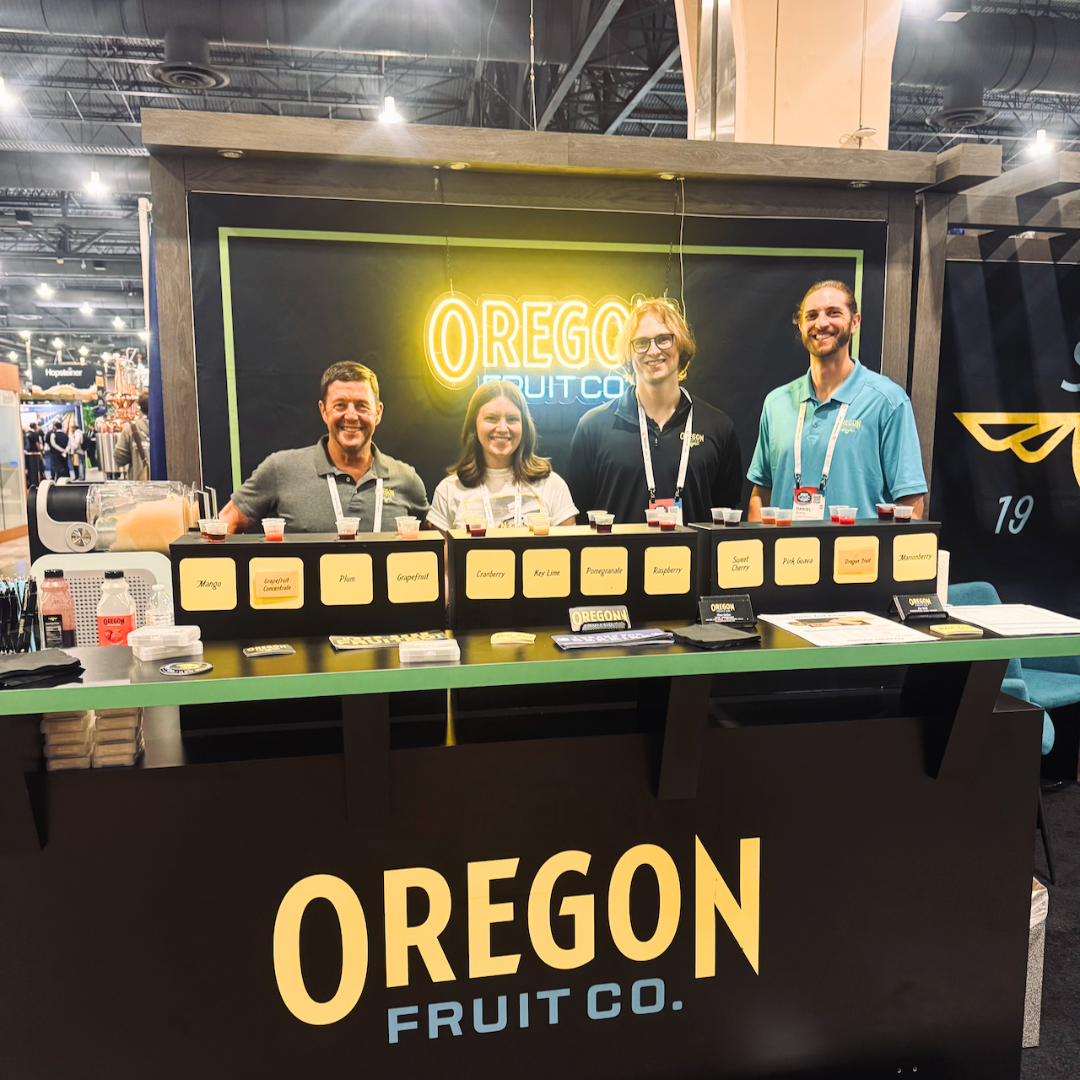

If you've spent any time talking with Oregon Fruit's fermentation sales managers Chris Hodge and Dan Wirth, you've probably heard some version of this observation: the best taprooms in the country have one thing in common, and it has nothing to do with IBUs.
It's a feeling.
The moment someone walks through your door, they're deciding whether they want to stay; whether they want to spend their hard-earned money on a second round, bring a friend next weekend, post about it. You can't fake that feeling, but you absolutely can create it. And the breweries, cideries, and meaderies doing it best are thinking bigger than what's in the glass.
Here's what Chris and Dan have learned from working alongside some of the most successful fermentation brands in the country.
PATIO SEASON IS HERE , IS YOUR OUTDOOR SPACE READY?
Temperatures are climbing, days are getting longer, and your guests are ready to be outside. Whether you're in the Midwest, the mid-Atlantic, the Southeast, or up in Canada, warmer weather means one thing for taprooms: it's time to dial in your patio.
And "dial in" means more than just unlocking the back door. The best outdoor taproom experiences are comfortable, fun, and genuinely welcoming. Think cushioned seating and cozy lounge areas that invite people to settle in rather than perch uncomfortably. Fire pits or patio heaters that extend the evening when the temperature drops — because in most of the country, even warm months have cool nights. Lawn games, bocce, cornhole, or giant Jenga that give guests a reason to stay for that third round. The outdoor space should feel like an extension of the hospitality inside, not an afterthought.

But it’s not about gimmicks or playgrounds. People want to feel like the world isn't ending. A well-designed, welcoming patio signals something important: this is a place where you can exhale. When guests are comfortable, they stay longer. When they're having fun, they bring people back with them.
Denver Beer Co. — part of the Wilding Brands family in Colorado — is a great example of this done right. Across five Denver-area locations, they've built outdoor spaces that feel intentional and inviting, with rotating food trucks and dog-friendly patios that keep people around for another round.
When we asked their VP Corey Dickinson about their success, he shared this:
At Denver Beer Company, our patios are built to be more than just a place to grab a beer- they’re a gathering place for the neighborhood. Across all five of our locations, each space is intentionally designed to feel open, welcoming, and easy to settle into, whether you’re catching up with friends, bringing the family out for an afternoon, or striking up a conversation with someone new at the next table over.
It’s that laid-back, come-as-you-are energy that defines the DBC experience- pairing perfectly with a fresh pint and a great bite to eat. From sunny afternoons to long summer evenings, our patios are an extension of the Denver communities in which they operate and a staple of Colorado culture.

When you're considering your patio, make sure the menu matches the moment. Warm-weather thinking doesn't stop at sours. Think rattlers, shandies, fruit-forward IPAs, and crushable seasonal releases that give every guest something to look forward to. Oregon raspberries in a hazy IPA. Marion Blackberries in a farmhouse ale. A stone fruit shandy that sells itself on description alone. These are the kinds of pours that suit a sunny afternoon on the patio — and bring in guests who might not have come in otherwise.
Patio season is short in a lot of markets. Make every weekend count.
INCLUSIVITY IS A STRATEGY (AND ALSO JUST THE RIGHT THING TO DO)
At their core, taprooms are drinking establishments. The great ones are also community spaces.
Chris and Dan have watched forward-thinking taprooms transform their businesses by asking a simple question: who isn't coming in right now, and why not? The answers usually point toward the same solution: broaden the beverage program and broaden the welcome.
Non-alcoholic options. Low-fizz and session-strength pours. Kombucha. Slushies. Hard cider for the person who doesn't love beer. A fruited mead for the guest who wandered in with a group. When you have something for everyone, you stop competing for the same customer and start building a community.
Urban Family Brewing in Seattle understands this well. They've turned their taproom into something that functions differently across different parts of the day — a coffee shop in the morning, a full brewery experience by evening. The result is a consistent customer base that feels ownership over the space. Rather than opening at 4 PM and hoping for the best, they've made their taproom a community landmark at all points in the day.
Bingo nights, nonprofit events, tap takeovers — these aren't just marketing tactics. They're how you signal to your neighborhood that your taproom is for them. When people feel like they can bring their whole family, or their colleague who doesn't drink beer, or their parents visiting from out of town, that's when the regulars show up more often, not less.

TAPROOM-ONLY RELEASES ARE A COMPETITIVE ADVANTAGE
Here's something distribution math makes pretty clear: not every beer deserves a shelf slot, and not every beer needs one.
Distribution is expensive. Distributor buy-in can be hard to earn for experimental or limited-production releases, and the economics often don't pencil out for something you're only brewing a few times a year. But those are sometimes your most interesting beers, and on-premise, they're pure gold.
Von Ebert Brewing in Portland does this well. Their raspberry releases (using Oregon Fruit raspberries, for the record) have built real taproom loyalty. The distributor might not be ready to take a chance on a raspberry beer at scale, but at the pub, it's one of the most compelling things on the board. People come in specifically for it. They talk about it. They bring friends.
This is where fruit can shine. A one-off blackberry saison. A seasonal cherry sour. A rotating peach wheat that only shows up when peaches are right. These aren't distribution plays — they're taproom experiences. And the margin on an on-premise pour beats the margin on a distributed six-pack every time.
Breakside Brewery has made experimentation part of their brand identity. Fruit plays a real role in that story. The experimental mentality isn't just good for creativity, it gives your staff something genuinely interesting to sell. Breakside has multiple locations and will feature different taps at different taprooms, leading to unique experiences for fans of their brand.
YOUR STAFF IS YOUR SECRET WEAPON
Speaking of selling: if you want someone to order a second drink (or try something outside their comfort zone) you need a team that can make the case for it.
Dan Wirth has a particular philosophy on this that his former crew at Migration Brewing helped crystallize: if a guest is still staring at the menu after ten seconds, stop waiting. Start putting samples in front of them. Not pushy — just helpful. A tiny pour of the raspberry wheat, the dry-hopped cider, the session sour. Let the liquid do the talking.
Sampling is one of the most powerful conversion tools in a taproom, and it costs very little relative to the return. Guests who try something unexpected and like it don't just buy that drink — they come back. They tell people. They become the kind of regulars who make your taproom feel alive.
THE BOTTOM LINE
Your taproom isn't just a place to sell beer. It's the best expression of your brand, the highest-margin part of your business, and the place where your most loyal customers are made.
The beverage makers who get this right — like Urban Family, Von Ebert, Breakside, Migration — they're not just making good beer. They're creating environments people want to be part of. They're building menus that give everyone a reason to show up. They're training staff who can genuinely sell. And they're using their taprooms as incubators for the kind of experimentation that keeps things interesting.
Chris Hodge and Dan Wirth have spent years working alongside fermentation brands across the country, and if there's one thing they'll tell you, it's this: the taproom is where the relationship between a brewery and its community is either built or missed. Get it right, and the rest follows.
Oregon Fruit has been helping craft beverage makers get it right since 1935. If you're thinking about how to optimize your taproom experience — whether that means building out a seasonal fruit program, developing taproom-exclusive releases, or figuring out what flavors your guests are ready to try next — we're here for that conversation.
We're not just a supplier. We're the team that wants to see your taproom thriving.
Interested in working with Chris, Dan, and the rest of the Oregon Fruit fermentation team?