A Menu Planning Guide for Coffee Shops and Cafes
Matcha has gone mainstream. It’s all over TikTok, showing up in grocery aisles, and filling the feeds of a generation that’s quietly ordering less coffee. But walk into most independent cafes and the matcha menu is either an afterthought or missing entirely.
That’s a gap worth closing.
For cafe operators, matcha does something coffee often can’t: it gives the non-coffee drinker a reason to come in, and gives the regular a reason to come back after noon. It’s lower caffeine, visually striking, and genuinely delicious. The question isn’t really whether the category has momentum. It does. The question is whether your menu is ready for it.
What’s Driving the Matcha Moment
The demand for matcha grew fast enough that the category ran into a genuine supply problem. A global matcha shortage in recent years was driven by consumers who wanted it more than farms could grow it. That’s not a trend. That’s a signal.
The big brands noticed. Oatly launched a packaged matcha oat milk product. Starbucks made its Iced Double Berry Matcha a featured seasonal drink this year. That’s worth sitting with for a second: the world’s largest coffeehouse chain is leading its seasonal menu with something that isn’t coffee.
The cold drink numbers at Starbucks tell the broader story. In March 2021, then-CEO Kevin Johnson told CNBC that more than 50% of beverages sold at Starbucks were cold. By Q3 2022, that number had reached 75% of US beverage sales. The shift to cold, customizable, visually driven drinks isn’t coming. It’s already here. Matcha belongs in that world.
Who Matcha Brings Through the Door
Here’s the part worth paying attention to: matcha doesn’t take customers away from your coffee program. It brings in people who weren’t going to order coffee anyway.
The guest ordering a matcha latte at 2pm is often someone who cut themselves off from espresso hours ago. Or someone who doesn’t drink coffee at all but still wants to sit somewhere nice with something good. Matcha gives those guests a place to land: a drink that feels considered, tastes genuinely interesting, and carries a quiet wellness appeal without tasting like a vitamin.
And that guest is increasingly younger. According to Datassential, 53% of Gen Z consumers look forward to getting a signature non-alcoholic beverage from a particular restaurant or cafe. Among Millennials, it’s 46%. Among Boomers, it’s 12%. Gen Z and Millennials are more than twice as likely as older consumers to be looking for new things to drink — and to have a specific spot in mind when they want one. Worth being that spot.
That’s a new ticket at 2pm you weren’t getting before. And a customer who might not have walked in at all.
The Build That Makes It Worth Ordering Twice
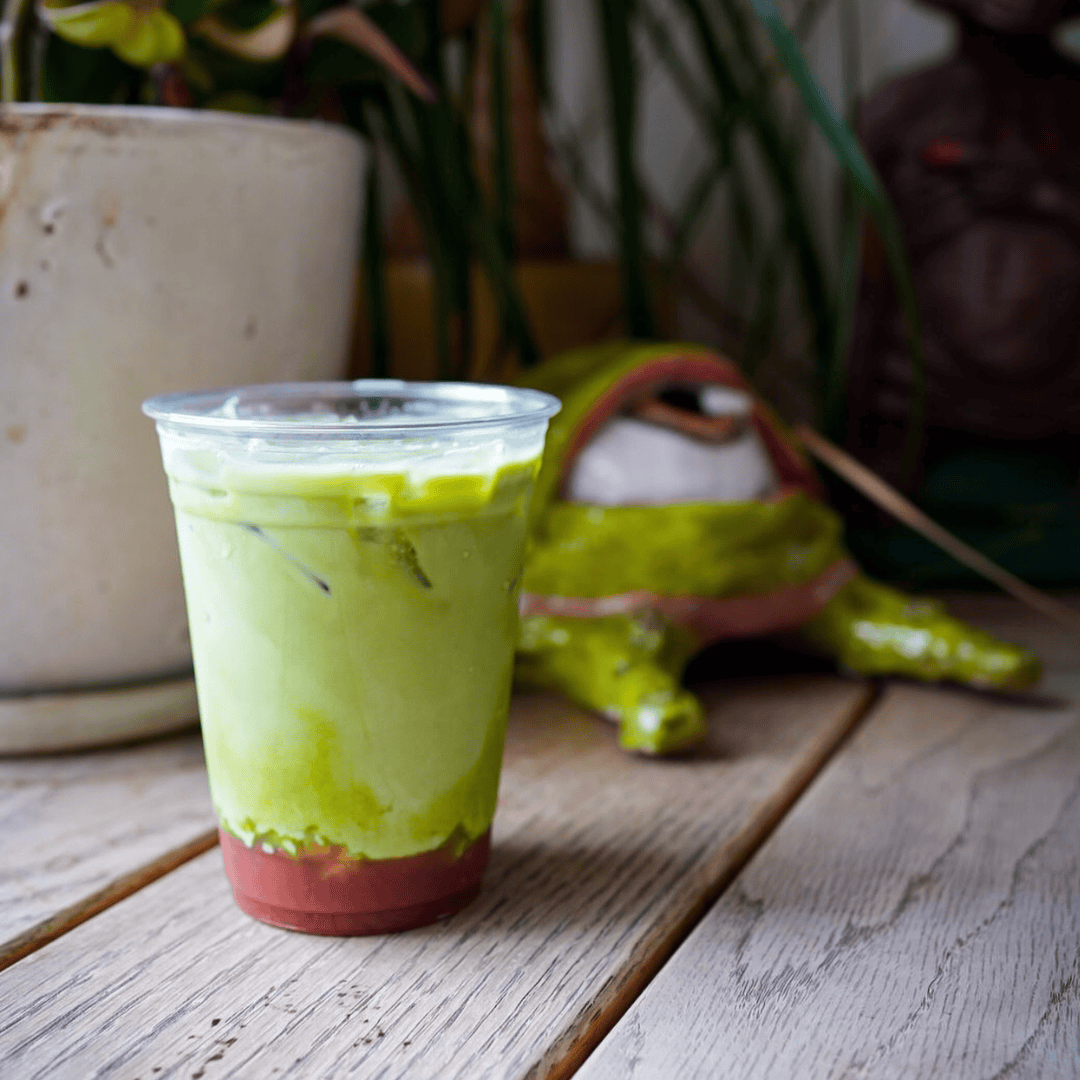
Matcha works hot or cold, which gives it genuine all-day appeal. But it’s especially compelling as a cold beverage, where the layered build really comes into its own. Whisk or blend the matcha, float it on top of a milk of your choice. The layered look is part of the appeal. People photograph it before they drink it, which is its own form of marketing.
And matcha pairs beautifully with fruit — which is where Oregon Fruit’s Pourable Fruit makes a real difference. Strawberry matcha is already having a moment, and for good reason. Pour strawberry puree at the base, add your milk of choice, then float the matcha on top. Three distinct layers: deep red, creamy white, vivid green. It looks great in a clear cup and it tastes like something you actually want to finish.
Tropicals work just as well. Our friends at Puff Coffee have been building with Pink Guava, and the combination is exactly what you’d hope for: bright, a little unexpected, and visually striking. Or go with Diced Pourable Fruit, like Marion Blackberry, if you want something with texture — real fruit pieces in the glass, visible through the cup, with a clean matcha finish on top.
Cold foam is another layer worth considering. It adds a soft, creamy top to the drink that plays well against the matcha’s earthiness and gives guests one more reason to slow down and enjoy it. Between diced fruit at the base and cold foam at the top, you’ve got a drink with real textural range.
It’s a good-looking drink that also happens to taste like real fruit. Both things matter. And indulgence is doing real work here: 43% of consumers who increased their non-alcoholic beverage consumption in the past year say they did so to treat themselves. Among Gen Z, that number is 48%. A layered matcha with real fruit at the base hits that brief in a way a plain latte doesn’t.
What the Specialty Coffee World Already Knows
Onyx Coffee Lab — one of the most respected names in specialty coffee — put Oregon Fruit’s Marion Blackberry Pourable Fruit at the base of their Marionberry Matcha Shake. Not a syrup. Not a flavor shot. Real fruit.
Specialty cafes tend to find these things first, and what works there has a way of making it to the rest of the industry. The good news is the fruit component isn’t complicated. It’s shelf-stable, pre-portioned, and ready to pour.

Building a Matcha Program That Holds Up
Adding matcha to your menu doesn’t have to mean adding a lot. One or two well-built drinks, consistent specs, and real fruit at the base. That’s a program your team can learn quickly and execute reliably during a rush.
It’s also worth noting: according to Datassential, among operators who saw increased beverage sales, 39% attribute that growth to new menu additions. New items drive new occasions. Matcha is a straightforward one to get right.
The same things that make a great refresher program work here too: lead with real fruit, keep the menu tight, and build for speed. A strawberry or peach puree base pours fast, reads clearly in a clear cup, and doesn’t require any equipment you don’t already have.
Spec the pour. Lock in the ratio. Make it the same drink every time. That’s what brings people back.
The Short Version
Matcha is not a trend to keep an eye on. It’s a category to build for now. The guests are already there. The brands are already there. The operators who get their matcha program right in the next year are going to be ahead of the ones who wait.
Oregon Fruit’s Smooth and Diced Pourable Fruit are a natural fit: real fruit, ready to pour, with the flavor and visual payoff that makes a drink worth coming back for.